Functional Mushrooms · Ganoderma lucidum
Reishi
Reishi — known as Lingzhi in Chinese and Mannentake in Japanese — has been documented in Chinese materia medica texts dating back over 2,000 years, where it was categorized as a superior-grade herb linked to longevity, vitality, and spiritual potency. It is the most extensively studied medicinal mushroom in the world.
Modern research has focused predominantly on its complex polysaccharides (beta-glucans) and triterpenoids. Beta-glucans are understood to modulate immune function by activating macrophages, NK cells, and dendritic cells. Triterpenoids — particularly ganoderic acids — have shown in vitro activity against several cancer cell lines and have demonstrated anti-inflammatory and hepatoprotective properties in animal models.
A 2016 Cochrane review on Ganoderma lucidum for cancer treatment concluded that evidence does not support Reishi as a primary cancer treatment, but noted that it may be considered as a complementary adjunct to conventional therapy — particularly for quality-of-life outcomes. Researchers have also investigated its potential as an adaptogen, noting reported effects on stress response and sleep quality in small human studies.
Active Compounds
Ganoderic acids (triterpenoids), Beta-glucans (1,3 / 1,6), Polysaccharides, Ling Zhi-8 protein, Adenosine, Ergosterol, Coumarin
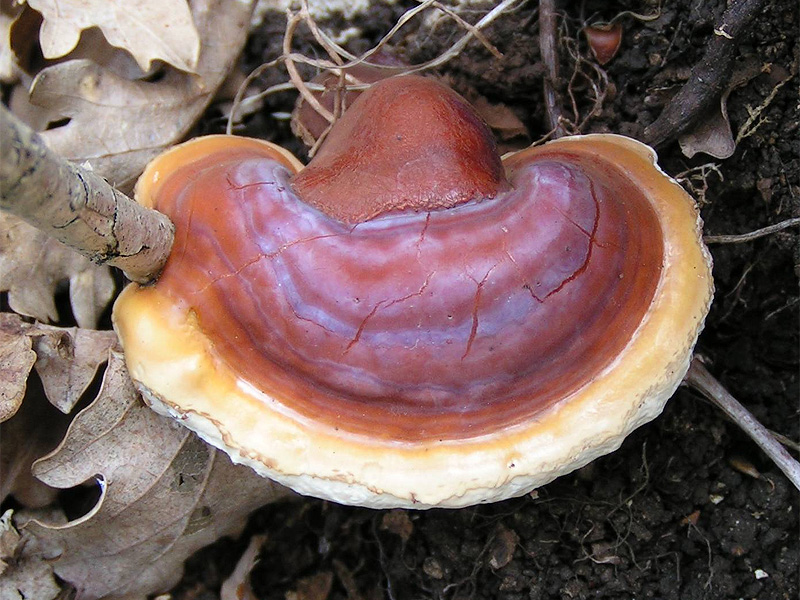
Reishi produces a hard, woody, shelf-like bracket with a distinct lacquered mahogany cap and white porous underside. Wild specimens grow on hardwoods, particularly oaks, in warm and humid temperate zones. In Canada it is more commonly found as Ganoderma applanatum (Artist's Conk), though G. lucidum does occur in warmer southern regions.
The fruiting body is not consumed directly as food — its extremely bitter taste and woody texture make it inedible without processing. It is typically prepared as a hot water decoction (tea), dual-extract tincture, or spray-dried powder.
Commercially cultivated Reishi is grown on logs or sawdust blocks. Spores are also commercialized; however, spore-based products have a distinct compound profile from fruiting body extracts.
Origin: East and Southeast Asia, North America (G. tsugae on conifers), Europe.
- Scientific Name
- Ganoderma lucidum
- Origin
- East Asia, Southeast Asia, North America