Functional Mushrooms · Grifola frondosa
Maitake
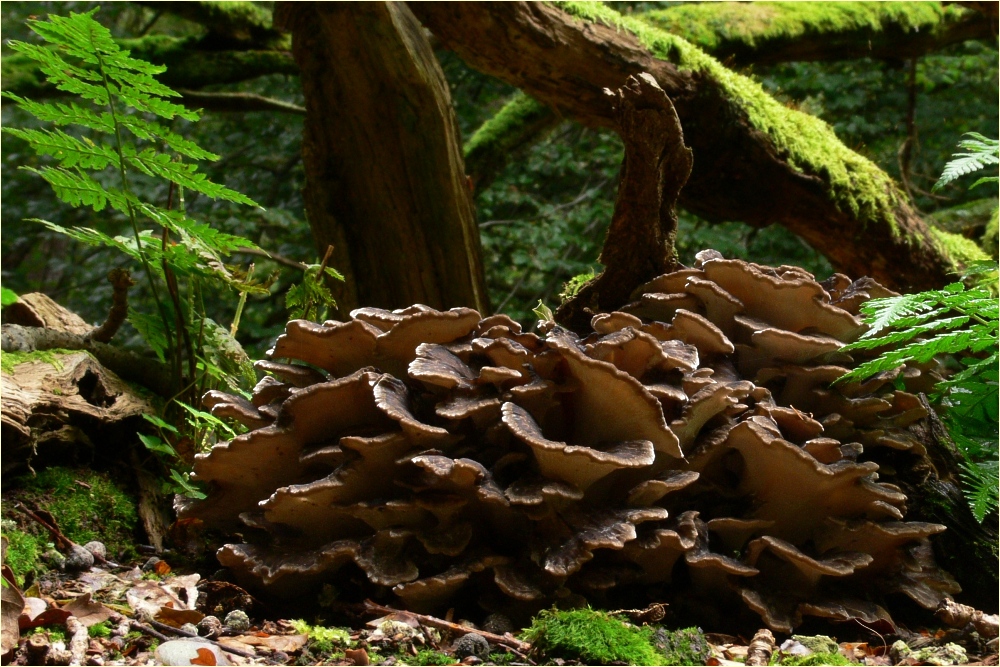
Maitake (lit. 'dancing mushroom' in Japanese) grows at the base of oak trees as a large, layered polypore with frond-like lobes in overlapping rosettes. It is both a prized culinary mushroom and one of the most pharmacologically active medicinal species. In Japan, it has long been associated with longevity and health in mountain communities where it grows wild.
The compound receiving the most clinical attention is Maitake D-Fraction — a specific beta-glucan extract standardized by Maitake Products Inc. A notable study by Kodama et al. (2002) examined patients with advanced cancer who could not receive conventional therapy; researchers documented immune parameter changes in the majority of patients taking D-Fraction. The study design was limited but generated continued interest in its immunomodulatory potential.
Additional research has explored Maitake's effects on blood glucose and insulin sensitivity. A 2015 study in *Diabetes Care* found that Grifola frondosa supplementation significantly reduced blood glucose in postmenopausal women with type 2 diabetes — a finding with implications for metabolic syndrome research.
Active Compounds
D-Fraction (beta-1,3/1,6-glucan), SX-Fraction (modified beta-glucan), Alpha-glucan, Ergosterol, Vitamin D2, Potassium, Polysaccharides
Maitake forms large clusters (up to 50kg in exceptional cases) at the base of mature oak trees, predominantly in northeastern North America, Japan, and China. It fruits in late summer through autumn. The overlapping grey-brown fronds with white margins are distinctive. It is an excellent edible — flavourful, firm-textured, and aromatic when cooked.
Wild Maitake is difficult to find but intensely sought by foragers — experienced harvesters often guard their discovery sites carefully. Commercial cultivation is possible but technically demanding, limiting availability of cultivated fresh Maitake.
For supplement use, D-Fraction and SX-Fraction are the two primary standardized Maitake extracts. SX-Fraction has been studied specifically for insulin sensitization. Whole mushroom powder is widely available but lacks the standardization of extracted fractions.
Origin: Northeastern North America (Appalachian region), Japan, China.
- Scientific Name
- Grifola frondosa
- Origin
- Northeastern North America, Japan, China