Functional Mushrooms · Inonotus obliquus
Chaga
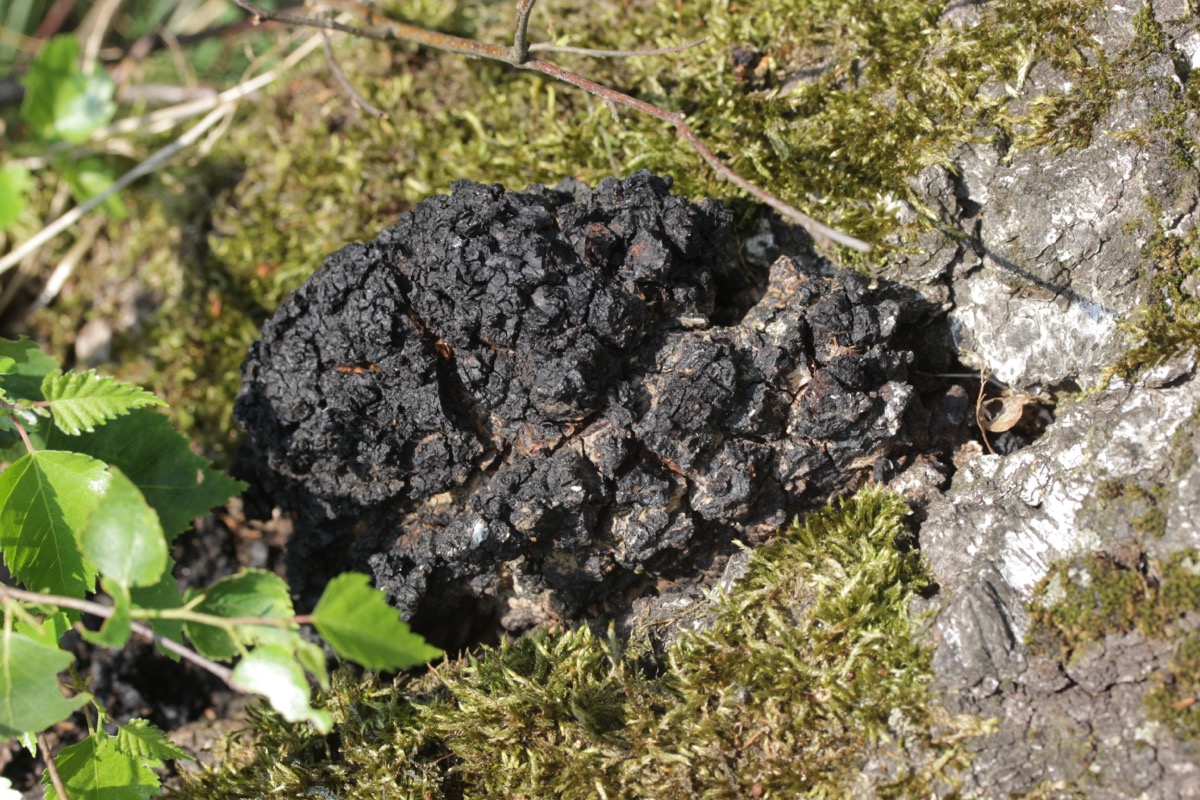
Chaga is not a conventional mushroom but rather a sterile conk (sclerotium) — a mass of hardened mycelium that erupts through the bark of birch trees, primarily in the boreal forests of Russia, Canada, Scandinavia, and northern Asia. It has been used in Siberian and Russian folk medicine since at least the 16th century, documented in the works of herbalists as a treatment for gastrointestinal conditions and cancer.
Chaga's antioxidant properties are attributed primarily to its high melanin content — the same pigment responsible for its coal-black exterior. Its ORAC (Oxygen Radical Absorbance Capacity) score is among the highest recorded for any natural food source, substantially exceeding acai berry, blueberries, and dark chocolate in in vitro testing. However, ORAC values are measured in controlled laboratory conditions and do not directly translate to in vivo antioxidant effects.
Research published in *Biofactors* (2005) identified betulinic acid and inotodiol as two bioactive compounds with demonstrated anti-proliferative activity against cancer cell lines. Chaga appears to derive betulinic acid directly from the birch bark it colonizes, which is one reason non-birch-grown Chaga substitutes are not considered equivalent.
Active Compounds
Betulinic acid (from birch bark), Inotodiol, Beta-glucans, Melanin complex, Ergosterol, Polyphenols, Birch triterpenes, Superoxide dismutase (SOD)
Wild Chaga grows almost exclusively on birch trees (Betula spp.), with rare occurrence on alder, elm, and hornbeam. It takes an average of 10–20 years to fully develop, making wild-harvested Chaga a finite resource that is being over-harvested in Russia and Finland. Sustainable harvesting protocols recommend leaving at least 20% of the conk on the tree.
The conk's exterior is jet-black, cracked, and charcoal-like. The interior is golden-orange to rust-coloured. Commercial products include raw chunks for decoction, powder, and dual-extract tinctures. Decoction in hot (not boiling) water produces a tea described as earthy and mildly vanilla-like — the most palatable of medicinal mushroom preparations.
Note: cultivated Chaga grown on substrates other than birch does not contain betulinic acid or the full spectrum of birch-derived triterpenes. Source provenance matters significantly for Chaga.
Origin: Russia (primary commercial source), Canada, Scandinavia, northeastern Asia.
- Scientific Name
- Inonotus obliquus
- Origin
- Russia, Canada, Scandinavia