Psilocybin Mushrooms · Panaeolus cyanescens
Blue Meanie (Panaeolus)
Panaeolus cyanescens (syn. Copelandia cyanescens) is the 'true' Blue Meanie — a distinct species from the Panaeolus genus that produces notably higher psilocin content relative to psilocybin compared to Psilocybe cubensis. The name is also commonly applied to a high-potency P. cubensis cultivar, creating persistent confusion. This entry covers the species P. cyanescens.
Analytical data from multiple studies reports total tryptamine content of P. cyanescens in the range of 0.5–2.95% by dry weight, with unusually high psilocin (the active metabolite) relative to the prodrug psilocybin. Because psilocin does not require dephosphorylation by intestinal alkaline phosphatase to become active, P. cyanescens experiences are reported to have a faster onset than P. cubensis.
P. cyanescens grows on dung in tropical and subtropical regions globally — Hawaii, India, Australia, and parts of the Caribbean. In comparison to Psilocybe species, Panaeolus species are smaller-fruited, thinner-capped, and do not blueify as dramatically (though blueing does occur on the gills when mature).
Active Compounds
Psilocin (elevated proportion), Psilocybin, Baeocystin, Urea
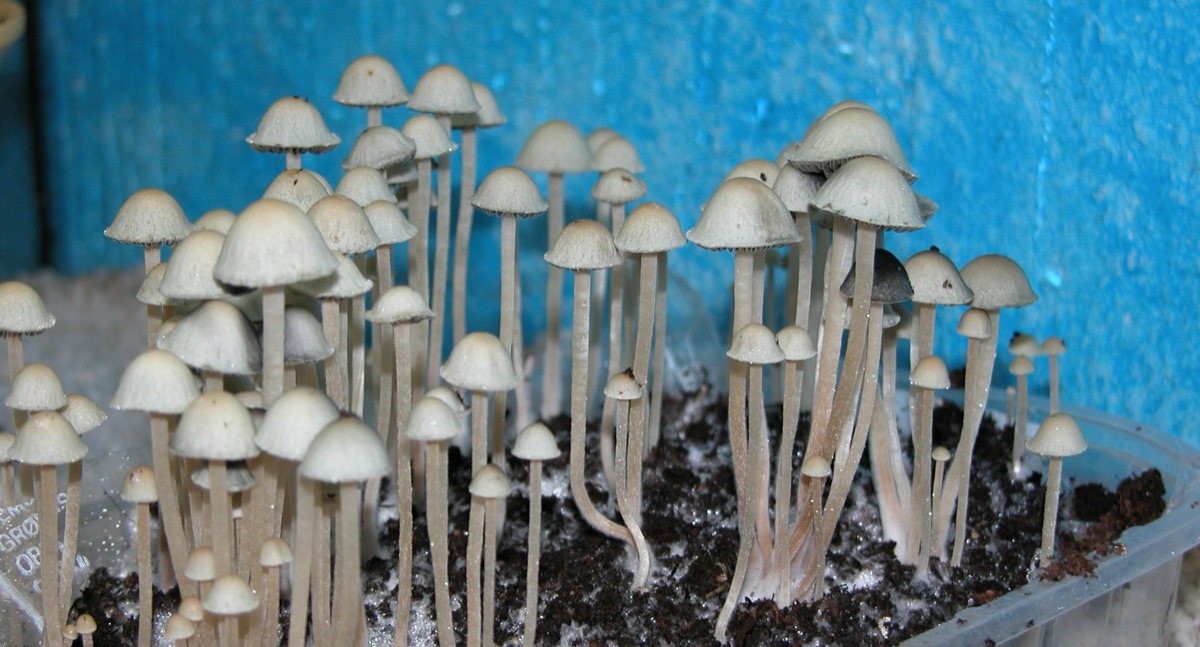
P. cyanescens produces small, grey-brown to tan caps (1–3cm diameter) on thin, fibrous stalks in dung-rich grass environments. The gills are densely packed and mottled black-grey to black at spore maturity (a characteristic of the Panaeolus genus — they don't release spores uniformly). Spore print is black.
The small fruiting body size means individual specimens contain less total alkaloid than large P. cubensis caps, making gram-to-gram comparisons with P. cubensis more meaningful than individual fruit comparisons. On an equal dry weight basis, P. cyanescens reliably exceeds standard P. cubensis in total tryptamine content.
Identification in the wild requires care: multiple small, dung-associated Panaeolus species exist, not all of which are psychoactive. P. cyanescens is distinguished by black spore print, mottled gills, and prominent blueing of gills when bruised.
- Scientific Name
- Panaeolus cyanescens
- Potency
- High
- Origin
- Tropical and subtropical globally — Hawaii, Australia, India, Caribbean